


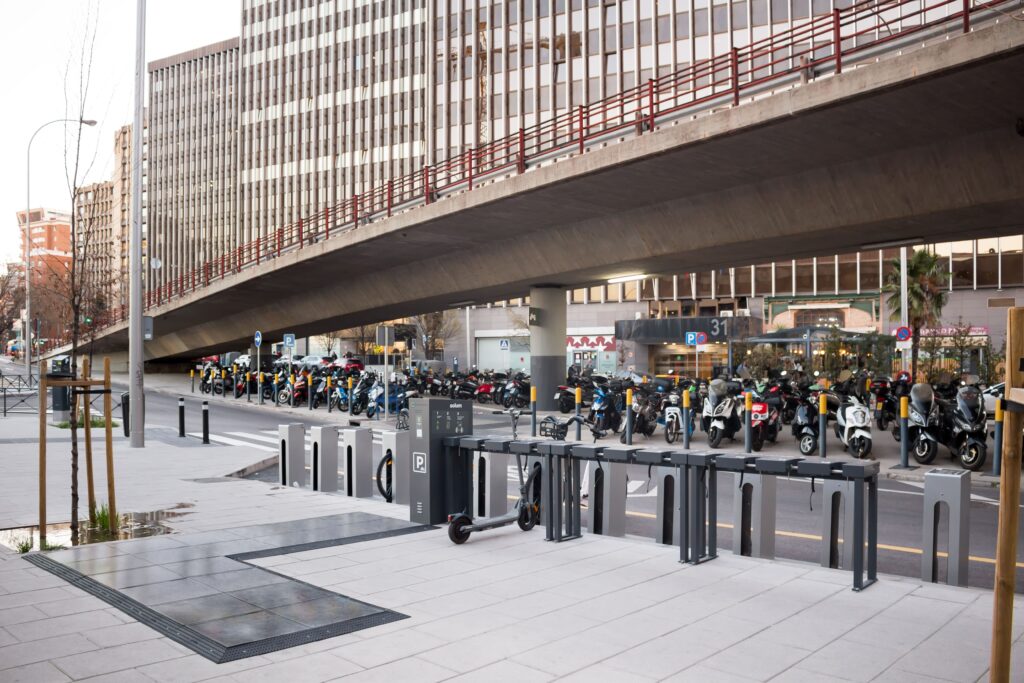
The Urban Mobility Challenge
Public administrations face the challenge of promoting sustainable and safe mobility in their municipalities. The growing adoption of personal mobility vehicles (PMVs), such as bicycles and electric scooters, requires adequate infrastructure to support their use and ensure user safety.
The Market
In Spain, urban micromobility is experiencing unprecedented growth. More and more citizens are choosing sustainable modes of transport such as bicycles and electric scooters for their daily commutes. In fact, Spain leads the use of these vehicles in Europe, with 30% of the urban population already using them regularly, according to recent industry data.
This shift responds to a growing need for agile, non-polluting transport solutions compatible with modern urban life. Public administrations thus face the challenge of adapting urban spaces and equipping them with infrastructure capable of supporting this new reality: personal, electric, shared, and distributed mobility.
The opportunity
Despite the increase in PMV usage, the lack of dedicated public infrastructure remains one of the main obstacles to their expansion. The 2024 Bicycle Barometer reveals that over 53% of citizens believe their municipality lacks sufficient parking or stations for bicycles and electric scooters, and nearly 40% state that such infrastructure simply does not exist.
Moreover, 91.7% of PMV trips are under 5 km, making them an ideal solution for urban environments—provided there are well-located charging and parking points to make them truly viable.
According to Solum’s Guide for Municipal Technicians, choosing the right location for charging stations is key to maximizing their impact and ensuring continued use. Poor placement can lead to underused infrastructure, while strategic locations—such as educational, commercial, or administrative areas—ensure a high social and environmental return.
This is where public administrations can make a difference: by equipping urban spaces with solutions like Helios in the right locations, they can boost micromobility use, organize public space, and enhance the citizen experience.
The Importance of Infrastructure: Is Your Municipality Equipped with the Right Infrastructure?
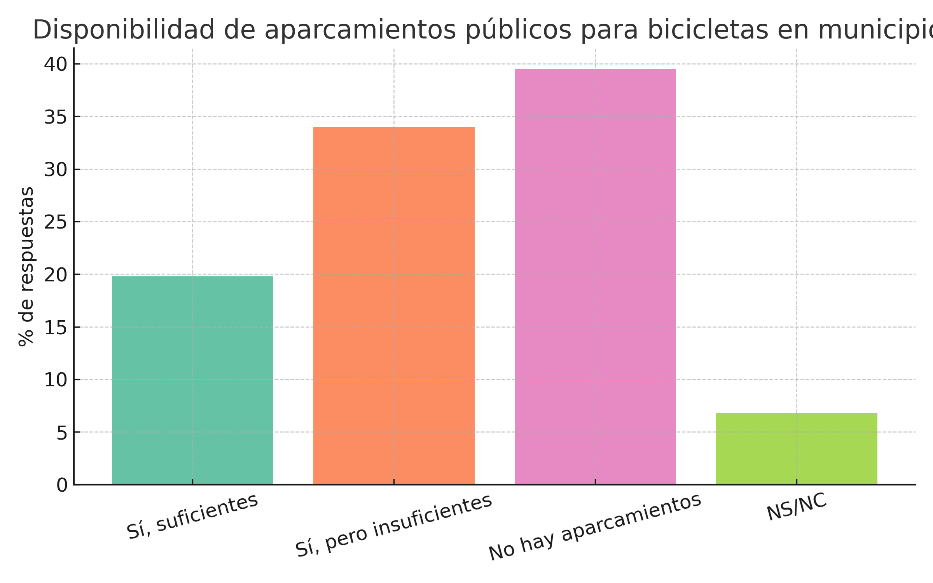
Beyond the number of users, the lack of adequate parking remains a barrier to the expansion of urban micromobility. According to the 2024 Bicycle Barometer:
- Only 19.8% of citizens believe there is sufficient public parking available.
- 34% state that they are insufficient
- 39.5% claim that they do not exist.
This means that more than half of the population (53.8%) perceives a significant shortfall in this area, which discourages the use of personal bicycles and scooters and leads to issues such as disorderly parking and vandalism.
Successful Stations in Various Municipalities – The Key Is in the Location
The proper placement of a Helios station makes the difference between infrastructure that simply exists and one that is used daily.
Below, we show how different public administrations have successfully maximized impact through strategic location choices:
🎓 Huelva – Educational Area
📍 Plaza de la Merced
👥 51 active users per month
⚡ 355 charging sessions per month
In a university area with high student traffic.
Helios has facilitated the daily use of electric scooters and bicycles among young people.
🏛️ Benalmádena – Municipal Buildings
📍 Next to public offices
👥 25 active users per month
⚡ 156 charging sessions per month
Ideal for municipal employees and citizens.
Promotes efficient mobility for daily administrative commutes.
🌊 El Puerto de Santa María – Seafront Promenade
📍 Tourist and leisure area
👥 13 active users per month
⚡ 33 charging sessions per month
Perfect for residents and visitors.
Clean mobility in a leisure setting with no need for an electrical connection.
🛍️ Valladolid – Commercial Area
📍 Shopping area
👥 20 active users per month
⚡ 68 charging sessions per month
Makes it easier for consumers to use PMVs for shopping, reducing congestion and enhancing the urban experience.
The Solution: Helios Stations in Strategic Locations
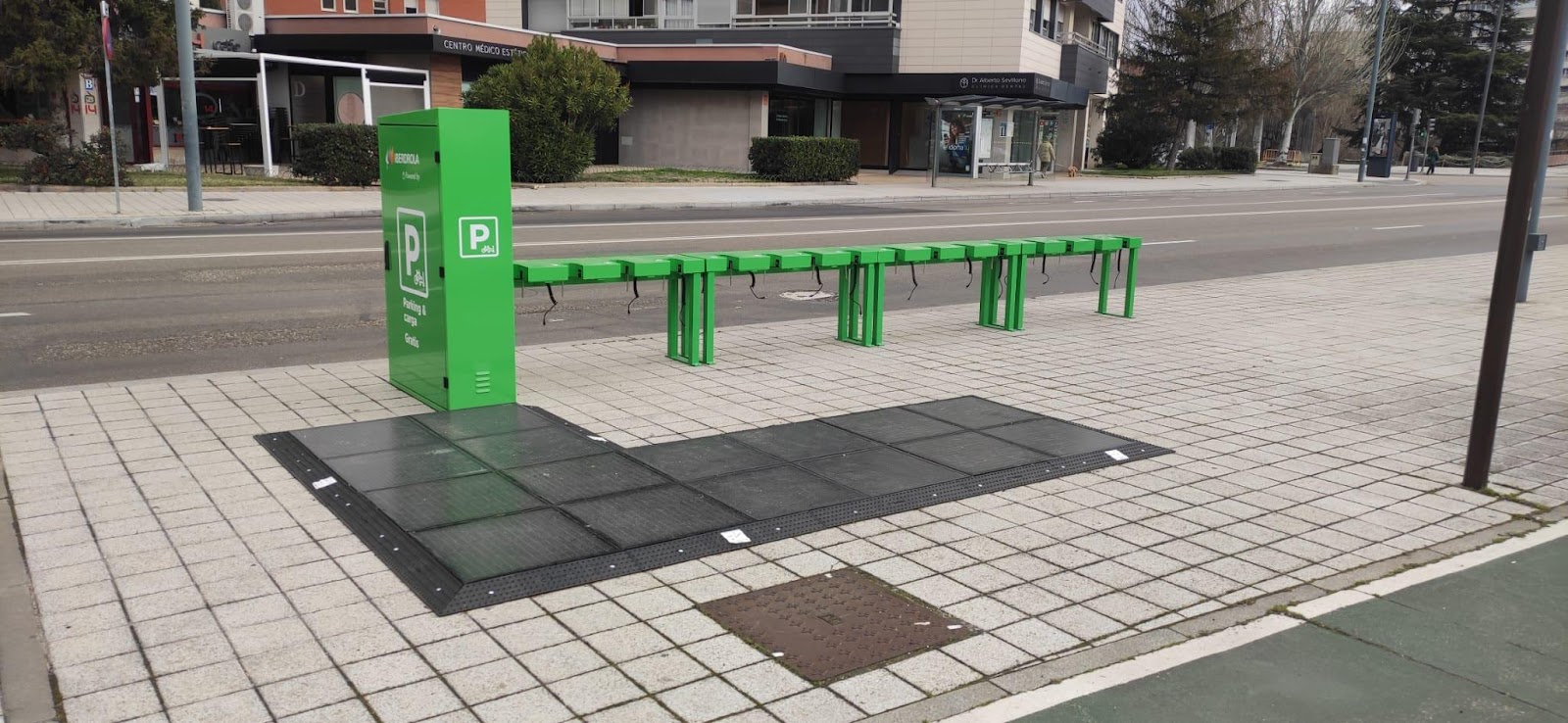
Solum’s Helios stations, powered by solar energy and requiring no connection to the electrical grid, offer an efficient and sustainable solution for PMV charging. Their quick, construction-free installation allows public administrations to deploy this infrastructure in key locations.
Benefits for Public Administrations
- Promotion of Sustainable Mobility: Encouraging the use of PMVs reduces pollutant emissions and improves air quality.
- Urban Space Optimization: Helios stations provide secure parking, preventing the disorderly parking of PMVs.
- Cost Reduction: With no need for electrical grid connection or civil works, installation and maintenance expenses are minimized.
- Adaptability: The modular design of the stations allows them to be adapted to different environments and needs.
Where Should Your Municipality Install Helios Stations?
Each setting has its own needs: educational centres, commercial areas, tourist spots, or public buildings. At Solum, we help you identify the locations with the highest potential to maximise impact. These success stories show how choosing the right location maximises both usage and the benefits of charging stations. For more information on how to implement Helios stations in your municipality, visit Solum.
They Already Trust Us: