


Today, we are going to answer a frequently asked question: Can you enter a hospital with a scooter?
The use of electric scooters is becoming increasingly widespread in society. They are convenient, agile, help us avoid traffic jams, and spare us the dreaded task of finding parking. However, despite their growing popularity, many questions still remain regarding their proper use.
At Solum, we take pride not only in being pioneers in the development of sustainable technologies but also in providing answers to questions surrounding urban and mobility issues. Since our founding in 2019, we have been committed to creating innovative solutions to make cities more efficient and sustainable.
Regulations and standards
First of all, reviewing local regulations in public spaces and analyzing hospital policies regarding the entry of scooters are essential to understanding and improving mobility in urban and healthcare environments.
Personal mobility vehicles
Also known as PMVs, including electric scooters, they are vehicles with one or more wheels designed for a single occupant and powered exclusively by electric motors, with a maximum design speed between 6 and 25 km/h.
Each city council can regulate the circulation of PMVs, such as electric scooters, in a specific manner, although all users must comply with minimum conditions. Therefore, it is essential to be aware of basic regulations before using these types of vehicles to ensure safe urban travel.
The prohibition of riding on sidewalks, pedestrian areas, and other spaces is a common rule. Authorized routes will be indicated by municipal ordinances, and in the absence of these, circulation is allowed on any urban roadway. Additionally, as mentioned earlier, the speed of PMVs must be between 6 and 25 km/h.
It is essential to know and respect these regulations to promote safe mobility in accordance with established rules. Thanks to this, we have managed to reduce the numbers from 2020, which recorded eight fatalities involving PMVs, with seven in urban areas and one on interurban roads, where their use is prohibited. Now, according to the DGT, this figure has dropped to 1 person, both in urban and interurban roads.

Technical requirements of the vehicle
The Directorate General of Traffic (DGT) has developed a Manual of Characteristics for personal mobility vehicles. After its publication and 24 months have passed, all PMVs must have a circulation certificate to ensure minimum safety requirements.
It is imperative that PMVs are equipped with a braking system, an acoustic warning device (bell), and both front and rear lights and reflective devices. Additionally, wearing a helmet is advised, even if the municipal ordinance does not make it mandatory, and having liability insurance is recommended.
Complying with these guidelines significantly contributes to ensuring the safety of both users and pedestrians in the urban environment. On the other hand, the maintenance of the electric scooter and the regular inspection of all its components are also essential.
Violations and associated penalties
Failing to comply with any of these requirements or regulations can result in a series of consequences:
- Riding an electric scooter under the influence of alcohol or other drugs can result in a fine ranging from 500 to 1,000 €, depending on the alcohol level. If drugs are involved, the fine will always be 1,000 €. In case of a positive test, the vehicle will also be immobilized, just as with other vehicles.
- Using a mobile phone or any other communication device while riding a scooter will result in a fine of 200 €.
- For those who wear headphones, ride at night without lighting or reflective clothing, or fail to wear a helmet (if the municipal ordinance requires it), the fine will be 200€.
Can you enter the hospital with a scooter?
In general, the entry of scooters into hospitals is allowed, but this may vary depending on the specific hospital. Some hospitals may have specific policies that prohibit or limit the use of scooters within their premises.
Above all, we must use common sense. Therefore, it is recommended that scooter users be considerate and respectful of hospital patients and staff. It is important to avoid using scooters in crowded areas or where they could cause disruptions or danger to others. Scooter users may be asked to move to a specific area to park their scooters.
If the hospital has a specific policy regarding the use of scooters, each user will need to adhere to these rules. These rules could include leaving the scooter at the reception before entering the hospital or parking it in designated parking areas. This latter option is becoming increasingly common in our cities. This is the case with Solum, which offers sustainable, safe, and convenient charging solutions.

Parking for PMVs (Personal Mobility Vehicles) in the hospital
The use of electric scooters is transforming the way people move around our cities. Due to the increase in PMV (personal mobility vehicle) users, more and more facilities are being built to park these types of vehicles, thus encouraging those who choose to use this sustainable mode of transportation.
Many institutions, both public and private, are considering adapting their facilities to accommodate electric scooters and other personal mobility vehicles due to the rise of this new form of mobility. As a result, it is becoming increasingly common to find PMV parking in many shopping centers, workplaces, and other locations.
Solum: A solution for parking your scooter at medical centers
With the aim of promoting sustainable mobility, Solum is a Spanish technology company that emerged from the idea of maximizing the available space in cities to generate renewable energy.
As the use of electric scooters has become increasingly popular, the need for safe and convenient places to park them has also risen. This is what Solum offers with its PMV facilities, where you can park your electric scooter and, at the same time, charge it, thanks to its solar-powered flooring
Currently, we can talk about several prominent projects, both in Spain and abroad, where charging solutions are being implemented in shopping centers, universities, and why not, in the near future, in hospitals? More and more hospitals and medical centers are adapting to this new reality. The goal behind all of this is to facilitate mobility and continue supporting the use of electric scooters, whether for people who need to go to the hospital for any reason or even for the workers themselves.
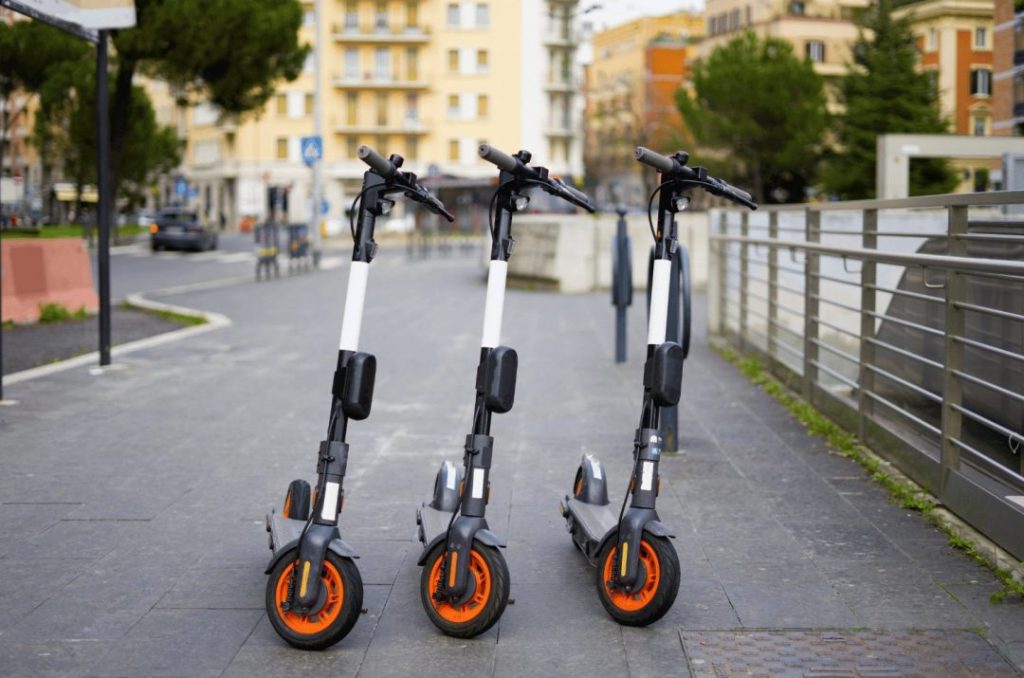
Advantages offered by Solum
- Autonomous: thanks to its solar-powered Arena floor and the batteries it contains, it does not require a connection to the electrical grid or any other external support.
- Sustainable: because it generates its own energy through the Arena solar floor, which is installed around it.
- Secure: one of the most notable advantages, as it features a smart anti-theft lock that secures the vehicle with a stainless steel bolt, providing great security for the user.
- Plug&Play: which means it is easy to install; it can be set up and ready for use in just one day.
- Multi-vehicle: in the same station, both electric scooters and bicycles can be parked.
- Smart: through the App and the miSolum platform, the customer can monitor and control all the functionalities of the station.
Cities are transforming, PMVs are the future, and the future is already here. If you want to learn more about us, visit our website or check out our blog, where we discuss the latest developments in sustainable movility.

